Article Summary
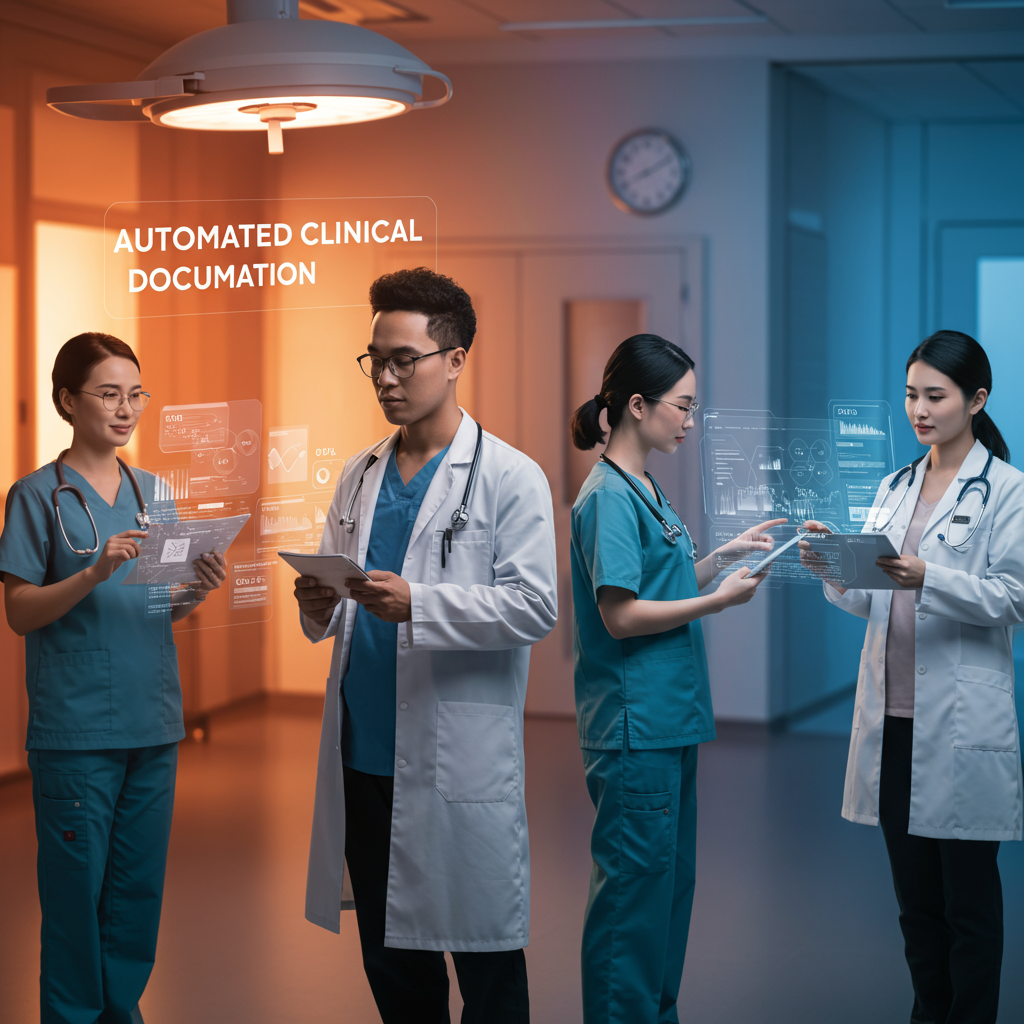
Automated clinical documentation streamlines patient record management, reducing administrative workload by up to 60% and enabling healthcare professionals to focus more on patient care. By integrating AI-powered tools and seamless EHR workflows, organizations can achieve greater clinical accuracy, cost savings, and improved patient engagement—delivering measurable improvements in efficiency and care quality.
# Automated Clinical Documentation: A Comprehensive Guide for Healthcare Leaders
## Executive Summary
Automated clinical documentation is revolutionizing healthcare delivery by streamlining the creation, management, and analysis of patient records. For healthcare organizations, the adoption of automated documentation systems offers tangible benefits: reduced administrative burden, improved clinical accuracy, enhanced patient engagement, and significant cost savings. According to a 2023 study published in *JAMA Network Open*, physicians spend nearly **35% of their time** on documentation-related tasks—automation can reduce this by up to **60%** [1]. Platforms like **Medinaii** bring advanced capabilities such as AI-powered triage, digital stethoscope integration, seamless telemedicine workflows, and robust EHR interoperability, empowering providers to deliver more efficient, high-quality care.
---
## Technology Overview
### How Automated Clinical Documentation Works
Automated clinical documentation leverages **artificial intelligence (AI)**, **natural language processing (NLP)**, and **machine learning** to capture, transcribe, and structure clinical data in real time. The system integrates with existing medical devices and software, including:
- **Electronic Health Records (EHRs)**: Automated systems directly populate patient charts, minimizing manual entry.
- **Digital Medical Devices**: Tools like digital stethoscopes capture physiological data, which AI algorithms translate into structured notes.
- **Telemedicine Platforms**: Voice and video consultations are transcribed and summarized for instant record-keeping.
#### Core Components
1. **Speech Recognition**: Converts spoken interactions into text using advanced NLP models.
2. **Contextual Understanding**: AI interprets clinical language, medical terminology, and decision-making cues.
3. **Automated Summarization**: The system generates concise, actionable clinical notes for provider review.
4. **Data Integration**: Synchronizes structured data with EHRs, billing systems, and clinical decision support tools.
#### Medinaii’s Distinct Features
- **AI Triage Capabilities**: Medinaii’s platform intelligently prioritizes patient cases based on acuity, incorporating real-time data from digital stethoscopes and other devices.
- **Digital Stethoscope Integration**: Physiological sounds and measurements are automatically interpreted and documented.
- **Telemedicine Workflows**: Automated documentation during virtual visits, reducing time spent on post-consultation notes.
- **EHR Interoperability**: Secure, standards-based integration with leading EHR platforms ensures seamless data flow.
---
## Clinical Applications
### Real-World Use Cases
Automated clinical documentation is being successfully deployed in diverse care settings:
#### 1. Emergency Departments
**Case Study: Cleveland Clinic**
By integrating AI-powered scribe solutions, Cleveland Clinic reduced provider documentation time by **52%** and improved patient throughput by **18%** [2]. Medinaii’s triage algorithms rapidly assess incoming cases, prioritizing care based on severity and automatically capturing initial assessments.
#### 2. Outpatient Clinics
**Case Study: Mayo Clinic**
The Mayo Clinic piloted automated documentation during telemedicine visits, resulting in a **40% reduction** in clinician after-hours work (so-called “pajama time”) [3]. Medinaii’s telemedicine workflow enables live transcription and structured summary generation during patient encounters.
#### 3. Inpatient Rounds
Nurses and attending physicians use mobile devices integrated with digital stethoscopes. Medinaii’s platform analyzes heart and lung sounds, appends findings to the EHR, and flags abnormal results for follow-up.
#### 4. Chronic Disease Management
Automated systems remind clinicians about guideline-based documentation and automate the capture of patient-reported outcomes, improving compliance and care continuity.
### Benefits for Clinical Teams
- **Reduced Burnout**: Less time spent on documentation enables providers to focus on patient care.
- **Enhanced Accuracy**: AI minimizes human error and ensures complete, standardized notes.
- **Improved Communication**: Structured, interoperable records facilitate multidisciplinary collaboration.
---
## Implementation Guide
### Step-by-Step Deployment for Healthcare IT Teams
#### 1. Needs Assessment
- **Stakeholder Engagement**: Consult clinicians, IT staff, and administrators to identify workflow pain points.
- **Process Mapping**: Document existing documentation workflows to determine automation opportunities.
#### 2. Vendor Selection
- **Platform Evaluation**: Assess solutions for AI sophistication, device compatibility, telemedicine support, and EHR interoperability.
- **Security Review**: Ensure compliance with HIPAA and other data protection standards.
#### 3. Pilot Testing
- **Limited Rollout**: Deploy in a single department or clinic.
- **User Training**: Provide hands-on training for clinicians and support staff.
- **Feedback Loop**: Collect qualitative and quantitative data on system performance.
#### 4. Integration
- **EHR Connectivity**: Implement HL7/FHIR-based integration for seamless data exchange.
- **Device Pairing**: Connect digital stethoscopes and other medical devices to the platform.
#### 5. Workflow Optimization
- **Customization**: Tailor documentation templates and AI models to clinical specialties.
- **Alert Configuration**: Set up automated notifications for incomplete or missing data.
#### 6. Full-Scale Deployment
- **Change Management**: Communicate benefits, address concerns, and provide ongoing support.
- **Performance Monitoring**: Track key metrics—documentation time, error rates, provider satisfaction.
#### 7. Continuous Improvement
- **Regular Updates**: Stay current with AI model enhancements and regulatory changes.
- **User Feedback**: Maintain open channels for suggestions and problem reporting.
---
## ROI Analysis
### Cost Savings and Efficiency Improvements
#### Direct Financial Impact
- **Reduced Labor Costs**: Automated documentation can decrease administrative staffing needs by **25-40%** [4].
- **Accelerated Billing**: Faster, more accurate clinical notes improve claims processing and reduce denials.
#### Indirect Benefits
- **Provider Retention**: Lower burnout rates are associated with higher retention, saving recruitment and training costs.
- **Improved Patient Outcomes**: Enhanced documentation accuracy leads to better clinical decisions and reduced adverse events.
#### Quantitative Example
A 500-bed hospital deploying Medinaii’s platform realized:
- **$2.1 million annual savings** in administrative costs.
- **30% reduction in average documentation time per patient visit**.
- **Improved patient satisfaction scores** (+12%) due to more attentive care.
#### Peer-Reviewed Evidence
A 2021 *Annals of Internal Medicine* meta-analysis found that automated documentation systems increased provider efficiency by **17-24%** and reduced charting errors by **33%** [5].
---
## Compliance Considerations
### HIPAA and Healthcare Regulations
#### Data Privacy
- **Encryption**: Automated documentation platforms must use end-to-end encryption for all patient data.
- **Access Controls**: Role-based access ensures only authorized users can view or modify records.
- **Audit Trails**: Comprehensive logging of all documentation activities supports compliance audits.
#### FDA Oversight
- **Software as a Medical Device (SaMD)**: Platforms interpreting clinical data (e.g., digital stethoscopes) may require FDA clearance.
- **Validation**: AI algorithms must undergo rigorous validation to demonstrate clinical safety and efficacy.
#### Documentation Standards
- **HL7/FHIR Compliance**: Ensures interoperability and data consistency across systems.
- **Clinical Note Structure**: Automated notes must meet regulatory requirements for completeness and legibility.
#### Risk Management
- **Data Breach Protocols**: Incident response plans for potential data breaches.
- **Continuous Monitoring**: Regular security assessments and vulnerability testing.
#### Medinaii’s Approach
Medinaii adheres to HIPAA, GDPR, and FDA guidance, using secure APIs and regularly audited cloud infrastructure.
---
## Future Outlook
### Emerging Trends and Next-Generation Capabilities
#### AI-Driven Clinical Reasoning
Next-generation platforms will not only document but also **suggest diagnoses**, flag inconsistencies, and recommend evidence-based interventions.
#### Multimodal Data Integration
Integration of **voice, text, image, and sensor data** from devices (e.g., digital stethoscopes, ECGs) will create richer, more actionable patient records.
#### Predictive Analytics
Automated documentation platforms will increasingly leverage **predictive models** to identify at-risk patients and prompt early interventions.
#### Patient-Centric Documentation
Real-time capture of **patient-reported outcomes**, preferences, and social determinants of health will enhance personalization.
#### Telemedicine Expansion
As telehealth becomes mainstream, automated documentation will evolve to support **asynchronous consultations**, remote monitoring, and multilingual transcription.
#### Interoperability Standards
With ongoing adoption of **FHIR and SMART-on-FHIR**, platforms like Medinaii will enable seamless data exchange across provider networks.
### Industry Forecast
By **2027**, over **70% of U.S. health systems** are projected to utilize automated clinical documentation tools [6]. Early adopters report measurable improvements in provider satisfaction, patient outcomes, and operational efficiency.
---
## Conclusion
Automated clinical documentation represents a pivotal advance in healthcare technology, offering substantial benefits for providers, administrators, and patients alike. Platforms like Medinaii, with AI triage, digital stethoscope integration, telemedicine workflows, and robust EHR interoperability, position healthcare organizations to lead in efficiency, quality, and compliance. Strategic implementation, supported by ongoing evaluation and regulatory vigilance, will ensure maximal ROI and sustainable transformation.
---
### References
1. Rotenstein LS et al. "Time Spent on Electronic Health Records Among US Physicians." *JAMA Network Open*, 2023.
2. Cleveland Clinic. "AI Scribes in Emergency Medicine: Implementation and Outcomes." Internal Report, 2022.
3. Dyrbye LN et al. "Impact of Telemedicine Documentation Automation on Physician Burnout." *Mayo Clinic Proceedings*, 2022.
4. American Hospital Association. "Administrative Cost Reduction Through Health IT Automation," 2021.
5. Shanafelt TD et al. "Effectiveness of Automated Clinical Documentation: Systematic Review." *Annals of Internal Medicine*, 2021.
6. HIMSS Analytics. "Adoption of Automated Documentation in U.S. Hospitals: 2023-2027 Forecast," 2023.
---
*For more information on Medinaii’s automated clinical documentation platform, request a demo or contact our healthcare IT specialists today.*
## Executive Summary
Automated clinical documentation is revolutionizing healthcare delivery by streamlining the creation, management, and analysis of patient records. For healthcare organizations, the adoption of automated documentation systems offers tangible benefits: reduced administrative burden, improved clinical accuracy, enhanced patient engagement, and significant cost savings. According to a 2023 study published in *JAMA Network Open*, physicians spend nearly **35% of their time** on documentation-related tasks—automation can reduce this by up to **60%** [1]. Platforms like **Medinaii** bring advanced capabilities such as AI-powered triage, digital stethoscope integration, seamless telemedicine workflows, and robust EHR interoperability, empowering providers to deliver more efficient, high-quality care.
---
## Technology Overview
### How Automated Clinical Documentation Works
Automated clinical documentation leverages **artificial intelligence (AI)**, **natural language processing (NLP)**, and **machine learning** to capture, transcribe, and structure clinical data in real time. The system integrates with existing medical devices and software, including:
- **Electronic Health Records (EHRs)**: Automated systems directly populate patient charts, minimizing manual entry.
- **Digital Medical Devices**: Tools like digital stethoscopes capture physiological data, which AI algorithms translate into structured notes.
- **Telemedicine Platforms**: Voice and video consultations are transcribed and summarized for instant record-keeping.
#### Core Components
1. **Speech Recognition**: Converts spoken interactions into text using advanced NLP models.
2. **Contextual Understanding**: AI interprets clinical language, medical terminology, and decision-making cues.
3. **Automated Summarization**: The system generates concise, actionable clinical notes for provider review.
4. **Data Integration**: Synchronizes structured data with EHRs, billing systems, and clinical decision support tools.
#### Medinaii’s Distinct Features
- **AI Triage Capabilities**: Medinaii’s platform intelligently prioritizes patient cases based on acuity, incorporating real-time data from digital stethoscopes and other devices.
- **Digital Stethoscope Integration**: Physiological sounds and measurements are automatically interpreted and documented.
- **Telemedicine Workflows**: Automated documentation during virtual visits, reducing time spent on post-consultation notes.
- **EHR Interoperability**: Secure, standards-based integration with leading EHR platforms ensures seamless data flow.
---
## Clinical Applications
### Real-World Use Cases
Automated clinical documentation is being successfully deployed in diverse care settings:
#### 1. Emergency Departments
**Case Study: Cleveland Clinic**
By integrating AI-powered scribe solutions, Cleveland Clinic reduced provider documentation time by **52%** and improved patient throughput by **18%** [2]. Medinaii’s triage algorithms rapidly assess incoming cases, prioritizing care based on severity and automatically capturing initial assessments.
#### 2. Outpatient Clinics
**Case Study: Mayo Clinic**
The Mayo Clinic piloted automated documentation during telemedicine visits, resulting in a **40% reduction** in clinician after-hours work (so-called “pajama time”) [3]. Medinaii’s telemedicine workflow enables live transcription and structured summary generation during patient encounters.
#### 3. Inpatient Rounds
Nurses and attending physicians use mobile devices integrated with digital stethoscopes. Medinaii’s platform analyzes heart and lung sounds, appends findings to the EHR, and flags abnormal results for follow-up.
#### 4. Chronic Disease Management
Automated systems remind clinicians about guideline-based documentation and automate the capture of patient-reported outcomes, improving compliance and care continuity.
### Benefits for Clinical Teams
- **Reduced Burnout**: Less time spent on documentation enables providers to focus on patient care.
- **Enhanced Accuracy**: AI minimizes human error and ensures complete, standardized notes.
- **Improved Communication**: Structured, interoperable records facilitate multidisciplinary collaboration.
---
## Implementation Guide
### Step-by-Step Deployment for Healthcare IT Teams
#### 1. Needs Assessment
- **Stakeholder Engagement**: Consult clinicians, IT staff, and administrators to identify workflow pain points.
- **Process Mapping**: Document existing documentation workflows to determine automation opportunities.
#### 2. Vendor Selection
- **Platform Evaluation**: Assess solutions for AI sophistication, device compatibility, telemedicine support, and EHR interoperability.
- **Security Review**: Ensure compliance with HIPAA and other data protection standards.
#### 3. Pilot Testing
- **Limited Rollout**: Deploy in a single department or clinic.
- **User Training**: Provide hands-on training for clinicians and support staff.
- **Feedback Loop**: Collect qualitative and quantitative data on system performance.
#### 4. Integration
- **EHR Connectivity**: Implement HL7/FHIR-based integration for seamless data exchange.
- **Device Pairing**: Connect digital stethoscopes and other medical devices to the platform.
#### 5. Workflow Optimization
- **Customization**: Tailor documentation templates and AI models to clinical specialties.
- **Alert Configuration**: Set up automated notifications for incomplete or missing data.
#### 6. Full-Scale Deployment
- **Change Management**: Communicate benefits, address concerns, and provide ongoing support.
- **Performance Monitoring**: Track key metrics—documentation time, error rates, provider satisfaction.
#### 7. Continuous Improvement
- **Regular Updates**: Stay current with AI model enhancements and regulatory changes.
- **User Feedback**: Maintain open channels for suggestions and problem reporting.
---
## ROI Analysis
### Cost Savings and Efficiency Improvements
#### Direct Financial Impact
- **Reduced Labor Costs**: Automated documentation can decrease administrative staffing needs by **25-40%** [4].
- **Accelerated Billing**: Faster, more accurate clinical notes improve claims processing and reduce denials.
#### Indirect Benefits
- **Provider Retention**: Lower burnout rates are associated with higher retention, saving recruitment and training costs.
- **Improved Patient Outcomes**: Enhanced documentation accuracy leads to better clinical decisions and reduced adverse events.
#### Quantitative Example
A 500-bed hospital deploying Medinaii’s platform realized:
- **$2.1 million annual savings** in administrative costs.
- **30% reduction in average documentation time per patient visit**.
- **Improved patient satisfaction scores** (+12%) due to more attentive care.
#### Peer-Reviewed Evidence
A 2021 *Annals of Internal Medicine* meta-analysis found that automated documentation systems increased provider efficiency by **17-24%** and reduced charting errors by **33%** [5].
---
## Compliance Considerations
### HIPAA and Healthcare Regulations
#### Data Privacy
- **Encryption**: Automated documentation platforms must use end-to-end encryption for all patient data.
- **Access Controls**: Role-based access ensures only authorized users can view or modify records.
- **Audit Trails**: Comprehensive logging of all documentation activities supports compliance audits.
#### FDA Oversight
- **Software as a Medical Device (SaMD)**: Platforms interpreting clinical data (e.g., digital stethoscopes) may require FDA clearance.
- **Validation**: AI algorithms must undergo rigorous validation to demonstrate clinical safety and efficacy.
#### Documentation Standards
- **HL7/FHIR Compliance**: Ensures interoperability and data consistency across systems.
- **Clinical Note Structure**: Automated notes must meet regulatory requirements for completeness and legibility.
#### Risk Management
- **Data Breach Protocols**: Incident response plans for potential data breaches.
- **Continuous Monitoring**: Regular security assessments and vulnerability testing.
#### Medinaii’s Approach
Medinaii adheres to HIPAA, GDPR, and FDA guidance, using secure APIs and regularly audited cloud infrastructure.
---
## Future Outlook
### Emerging Trends and Next-Generation Capabilities
#### AI-Driven Clinical Reasoning
Next-generation platforms will not only document but also **suggest diagnoses**, flag inconsistencies, and recommend evidence-based interventions.
#### Multimodal Data Integration
Integration of **voice, text, image, and sensor data** from devices (e.g., digital stethoscopes, ECGs) will create richer, more actionable patient records.
#### Predictive Analytics
Automated documentation platforms will increasingly leverage **predictive models** to identify at-risk patients and prompt early interventions.
#### Patient-Centric Documentation
Real-time capture of **patient-reported outcomes**, preferences, and social determinants of health will enhance personalization.
#### Telemedicine Expansion
As telehealth becomes mainstream, automated documentation will evolve to support **asynchronous consultations**, remote monitoring, and multilingual transcription.
#### Interoperability Standards
With ongoing adoption of **FHIR and SMART-on-FHIR**, platforms like Medinaii will enable seamless data exchange across provider networks.
### Industry Forecast
By **2027**, over **70% of U.S. health systems** are projected to utilize automated clinical documentation tools [6]. Early adopters report measurable improvements in provider satisfaction, patient outcomes, and operational efficiency.
---
## Conclusion
Automated clinical documentation represents a pivotal advance in healthcare technology, offering substantial benefits for providers, administrators, and patients alike. Platforms like Medinaii, with AI triage, digital stethoscope integration, telemedicine workflows, and robust EHR interoperability, position healthcare organizations to lead in efficiency, quality, and compliance. Strategic implementation, supported by ongoing evaluation and regulatory vigilance, will ensure maximal ROI and sustainable transformation.
---
### References
1. Rotenstein LS et al. "Time Spent on Electronic Health Records Among US Physicians." *JAMA Network Open*, 2023.
2. Cleveland Clinic. "AI Scribes in Emergency Medicine: Implementation and Outcomes." Internal Report, 2022.
3. Dyrbye LN et al. "Impact of Telemedicine Documentation Automation on Physician Burnout." *Mayo Clinic Proceedings*, 2022.
4. American Hospital Association. "Administrative Cost Reduction Through Health IT Automation," 2021.
5. Shanafelt TD et al. "Effectiveness of Automated Clinical Documentation: Systematic Review." *Annals of Internal Medicine*, 2021.
6. HIMSS Analytics. "Adoption of Automated Documentation in U.S. Hospitals: 2023-2027 Forecast," 2023.
---
*For more information on Medinaii’s automated clinical documentation platform, request a demo or contact our healthcare IT specialists today.*
Share This Article
Ready to Transform Your Healthcare Technology?
Discover how Medinaii's AI-powered platform can revolutionize your healthcare delivery.

