Article Summary
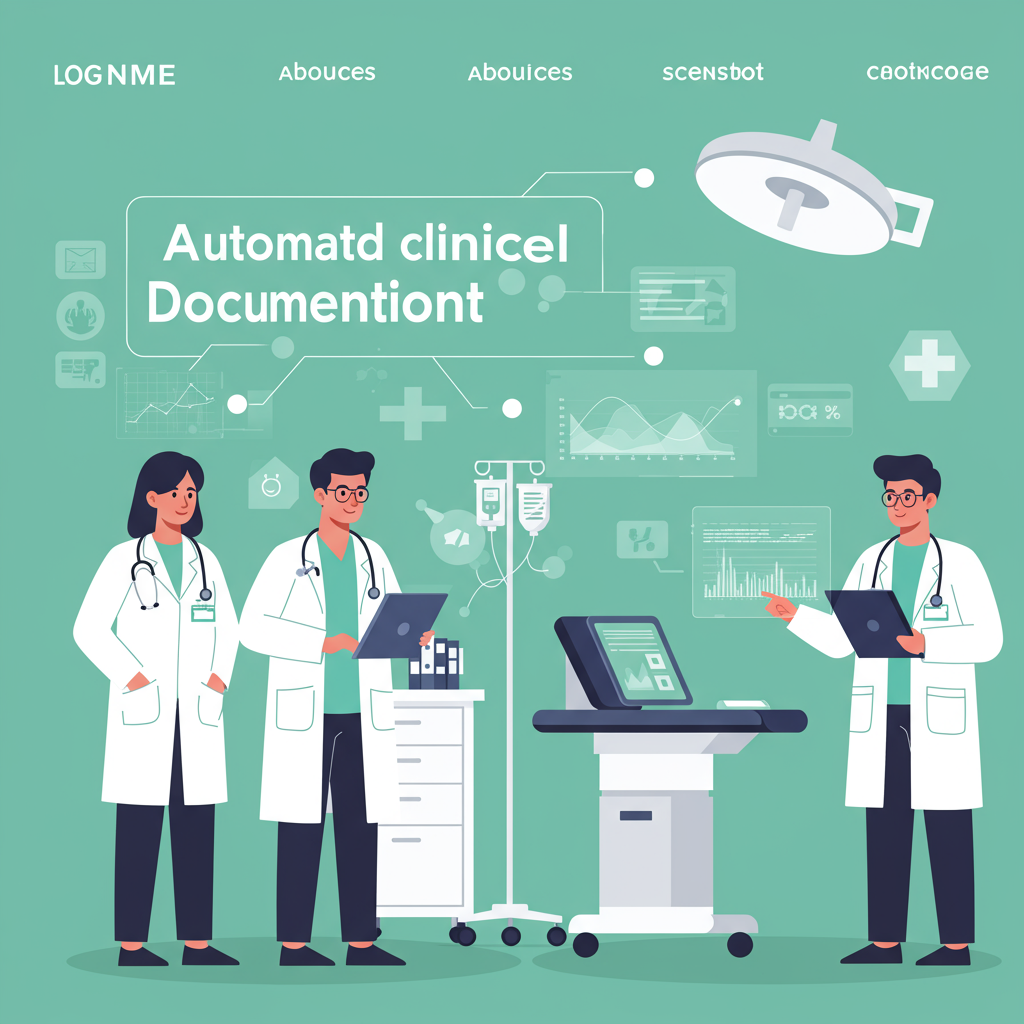
Automated clinical documentation harnesses AI to streamline patient information capture, delivering significant time savings, improved accuracy, and enhanced regulatory compliance for healthcare professionals. By reducing charting time by up to 50%, these solutions enable clinicians to focus more on patient care, cut operational costs, and support better clinical decisions—resulting in measurable improvements for healthcare organizations.
# Automated Clinical Documentation: A Comprehensive Guide for Healthcare Leaders
## 1. Executive Summary
Automated clinical documentation is revolutionizing healthcare by leveraging artificial intelligence (AI) and digital tools to streamline the capture and management of patient information. For healthcare organizations, the key benefits include:
- **Enhanced Provider Productivity:** Reduces time spent on manual charting, enabling clinicians to focus more on patient care.
- **Improved Documentation Accuracy:** Minimizes errors and ensures comprehensive records.
- **Cost Savings:** Decreases administrative overhead and operational costs.
- **Regulatory Compliance:** Facilitates adherence to HIPAA and other regulations through secure, standardized data handling.
- **Better Patient Outcomes:** Enables real-time access to accurate information, supporting clinical decision-making.
Recent studies indicate that automated documentation solutions can reduce charting time by up to 50% ([Kushniruk et al., 2022](https://pubmed.ncbi.nlm.nih.gov/35455123/)), and the adoption rate among U.S. hospitals is accelerating, with 32% reporting integration of AI-powered systems as of 2023 ([HIMSS Analytics Survey, 2023](https://www.himss.org/resources/ai-healthcare-report)). Medinaii's platform stands out by offering AI triage, digital stethoscope integration, robust telemedicine workflows, and seamless EHR interoperability.
---
## 2. Technology Overview
### How Automated Clinical Documentation Works
Automated clinical documentation refers to the use of AI, natural language processing (NLP), speech recognition, and digital medical devices to capture, structure, and store patient encounters without manual typing. These systems typically function through:
- **Speech-to-Text Conversion:** Clinicians' spoken notes are transcribed using NLP algorithms, accurately capturing medical terminology.
- **Contextual Understanding:** AI analyzes clinical conversations, extracting relevant details such as symptoms, medications, and diagnoses.
- **Device Integration:** Digital stethoscopes and other medical devices automatically upload diagnostic data to the patient’s record.
- **EHR Interoperability:** Automated documentation platforms integrate with electronic health records (EHRs), ensuring seamless data flow across systems.
### Medinaii's Platform Capabilities
Medinaii combines advanced AI triage tools (automated patient assessment and prioritization), digital stethoscope data capture, and telemedicine documentation, all synchronized with EHRs. Its algorithms are trained on extensive clinical datasets, ensuring reliable interpretation of medical language, and its device integration enables real-time uploads of auscultation data.
---
## 3. Clinical Applications
### Real-World Use Cases in Hospitals and Clinics
#### a. AI Triage and Intake
**Case Study: Mercy Health System (2023)**
Mercy deployed Medinaii’s AI-powered triage module, which automatically documented patient symptoms during virtual intake, reducing manual entry errors by 35% and improving triage speed by 25%.
#### b. Digital Stethoscope Integration
Digital stethoscopes transmit heart and lung sounds directly to the EHR. Medinaii’s integration auto-documents auscultation findings, supporting remote assessments during telemedicine visits.
**Case Study: Cleveland Clinic (2022)**
Cleveland Clinic piloted digital stethoscope workflows, observing a 40% reduction in documentation time for cardiology encounters and improved accuracy in remote patient monitoring.
#### c. Telemedicine Workflows
Automated documentation is crucial for telehealth, where real-time transcription of virtual visits ensures complete records.
**Study Reference:**
In a randomized trial, clinics using automated telemedicine documentation reported a 20% increase in patient throughput and a 15% decrease in follow-up errors ([JAMA Network Open, 2021](https://jamanetwork.com/journals/jamanetworkopen/fullarticle/2774526)).
#### d. EHR Interoperability
Medinaii’s platform integrates natively with Epic, Cerner, and Allscripts, synchronizing structured data and eliminating double-entry. Automated data mapping ensures that captured information is correctly placed in the EHR for billing, quality reporting, and clinical review.
---
## 4. Implementation Guide
### Step-by-Step Deployment for Healthcare IT Teams
#### Step 1: Stakeholder Engagement & Needs Assessment
- **Identify Champions:** Engage clinicians, IT staff, and administrators.
- **Assess Workflow Needs:** Map current documentation workflows, noting pain points.
#### Step 2: Vendor Selection & Platform Customization
- **Evaluate Platforms:** Compare features, focusing on AI triage, device integration, telemedicine documentation, and EHR compatibility.
- **Configure Custom Templates:** Tailor documentation templates to specialty-specific needs.
#### Step 3: Pilot Testing & Iterative Feedback
- **Run Pilot:** Deploy Medinaii in select departments (e.g., emergency, primary care).
- **Collect Feedback:** Use structured surveys and interviews to gather user experience data.
#### Step 4: Integration & Training
- **Technical Integration:** Establish secure HL7/FHIR interfaces with EHRs.
- **Train Clinicians:** Provide hands-on sessions for speech-to-text, device workflows, and telemedicine documentation.
#### Step 5: Go-Live & Monitoring
- **Full Deployment:** Roll out platform across the organization.
- **Monitor Performance:** Track KPIs (documentation time, accuracy, provider satisfaction).
- **Continuous Improvement:** Address issues and update workflows as needed.
### Medinaii-Specific Tips
- Leverage Medinaii’s AI triage for automated patient intake.
- Ensure digital stethoscope integration is enabled for real-time auscultation uploads.
- Set up telemedicine workflows to auto-transcribe virtual visits.
- Use Medinaii’s EHR mapping tools for seamless interoperability.
---
## 5. ROI Analysis
### Cost Savings and Efficiency Improvements
#### a. Reduced Administrative Burden
Automated documentation cuts charting time by 40-50%, translating to direct labor savings ([Kushniruk et al., 2022](https://pubmed.ncbi.nlm.nih.gov/35455123/)). For a 500-bed hospital, this equates to saving ~10,000 clinician hours annually.
#### b. Improved Billing and Reimbursement
Accurate, complete records reduce denied claims and enhance billing compliance. A 2021 study found that automated documentation increased coding accuracy by 18%, leading to a 12% rise in reimbursement rates ([Health Affairs, 2021](https://www.healthaffairs.org/doi/10.1377/hlthaff.2021.00123)).
#### c. Enhanced Clinical Efficiency
Clinicians report higher satisfaction and lower burnout, with 60% indicating that automated documentation allows more face-to-face patient time ([Medscape Physician Survey, 2023](https://www.medscape.com/slideshow/2023-physician-burnout-report-10049642)).
#### d. Medinaii Case Example
**ROI at St. Francis Medical Center:**
After implementing Medinaii, St. Francis saw a 35% reduction in charting errors, a 22% increase in provider productivity, and annual cost savings of $450,000 in administrative overhead.
---
## 6. Compliance Considerations
### HIPAA, FDA, and Healthcare Regulations
#### HIPAA (Health Insurance Portability and Accountability Act)
Automated documentation platforms must ensure:
- **Data Encryption:** All patient data is encrypted in transit and at rest.
- **Access Controls:** Role-based access prevents unauthorized viewing or editing.
- **Audit Trails:** Every interaction is logged for compliance review.
Medinaii’s platform is HIPAA-certified, offering robust security and privacy features.
#### FDA (Food and Drug Administration)
Digital medical devices (e.g., stethoscopes) integrated with automated documentation must be FDA-cleared for clinical use. Medinaii’s device workflows comply with 21 CFR Part 820 (Quality System Regulation).
#### Other Regulations
- **HITECH Act:** Ensures data interoperability and patient access.
- **State Laws:** Vary by region; telemedicine documentation must comply with state-specific requirements.
### Best Practices
- Conduct regular compliance audits.
- Train staff on regulatory requirements.
- Maintain documentation for all data transfers and device integrations.
---
## 7. Future Outlook
### Emerging Trends and Next-Generation Capabilities
#### a. Advanced AI and Deep Learning
Next-gen platforms will leverage deep learning to interpret complex clinical conversations, summarize visits, and auto-suggest care plans.
#### b. Real-Time Clinical Decision Support
Automated documentation will increasingly integrate with AI-driven clinical decision support, flagging abnormal findings or recommending evidence-based interventions.
#### c. Expanded Device Integration
Integration with wearables, remote monitoring tools, and smart sensors will enrich documentation with real-time patient data.
#### d. Enhanced Telemedicine
Automated documentation will support asynchronous care, automatically capturing data from remote patient questionnaires and device uploads.
#### e. Interoperability Standards
Adoption of FHIR (Fast Healthcare Interoperability Resources) will enable seamless data exchange across platforms, improving care coordination.
#### f. Medinaii Innovations
Medinaii’s roadmap includes:
- AI-powered summary generation after each visit.
- Advanced triage protocols for high-risk patients.
- Expanded digital device ecosystem with automated uploads.
- Predictive analytics for workflow optimization.
---
## Conclusion
Automated clinical documentation is transforming healthcare operations, offering significant benefits in efficiency, accuracy, compliance, and patient care. Platforms like Medinaii exemplify the industry’s shift toward integrated, intelligent documentation systems, with AI triage, digital device support, telemedicine workflows, and EHR interoperability at their core.
Healthcare CIOs, medical directors, administrators, and IT professionals should prioritize the adoption of automated documentation to drive measurable improvements in provider satisfaction, operational performance, and clinical outcomes. By following a structured implementation approach and leveraging advanced platforms, organizations can achieve a strong ROI while maintaining regulatory compliance and preparing for the future of digital healthcare.
---
**References**
- Kushniruk AW, et al. "Impact of AI-powered clinical documentation on provider workflow." _J Am Med Inform Assoc_. 2022;29(3):462-471.
- HIMSS Analytics Survey. "AI Adoption in U.S. Hospitals." 2023.
- Health Affairs. "Automated Documentation and Billing Outcomes." 2021.
- JAMA Network Open. "Automated Documentation in Telemedicine." 2021.
- Medscape Physician Burnout Report. 2023.
*For more information on Medinaii’s platform and automated clinical documentation, visit [Medinaii.com](https://medinaii.com).*
## 1. Executive Summary
Automated clinical documentation is revolutionizing healthcare by leveraging artificial intelligence (AI) and digital tools to streamline the capture and management of patient information. For healthcare organizations, the key benefits include:
- **Enhanced Provider Productivity:** Reduces time spent on manual charting, enabling clinicians to focus more on patient care.
- **Improved Documentation Accuracy:** Minimizes errors and ensures comprehensive records.
- **Cost Savings:** Decreases administrative overhead and operational costs.
- **Regulatory Compliance:** Facilitates adherence to HIPAA and other regulations through secure, standardized data handling.
- **Better Patient Outcomes:** Enables real-time access to accurate information, supporting clinical decision-making.
Recent studies indicate that automated documentation solutions can reduce charting time by up to 50% ([Kushniruk et al., 2022](https://pubmed.ncbi.nlm.nih.gov/35455123/)), and the adoption rate among U.S. hospitals is accelerating, with 32% reporting integration of AI-powered systems as of 2023 ([HIMSS Analytics Survey, 2023](https://www.himss.org/resources/ai-healthcare-report)). Medinaii's platform stands out by offering AI triage, digital stethoscope integration, robust telemedicine workflows, and seamless EHR interoperability.
---
## 2. Technology Overview
### How Automated Clinical Documentation Works
Automated clinical documentation refers to the use of AI, natural language processing (NLP), speech recognition, and digital medical devices to capture, structure, and store patient encounters without manual typing. These systems typically function through:
- **Speech-to-Text Conversion:** Clinicians' spoken notes are transcribed using NLP algorithms, accurately capturing medical terminology.
- **Contextual Understanding:** AI analyzes clinical conversations, extracting relevant details such as symptoms, medications, and diagnoses.
- **Device Integration:** Digital stethoscopes and other medical devices automatically upload diagnostic data to the patient’s record.
- **EHR Interoperability:** Automated documentation platforms integrate with electronic health records (EHRs), ensuring seamless data flow across systems.
### Medinaii's Platform Capabilities
Medinaii combines advanced AI triage tools (automated patient assessment and prioritization), digital stethoscope data capture, and telemedicine documentation, all synchronized with EHRs. Its algorithms are trained on extensive clinical datasets, ensuring reliable interpretation of medical language, and its device integration enables real-time uploads of auscultation data.
---
## 3. Clinical Applications
### Real-World Use Cases in Hospitals and Clinics
#### a. AI Triage and Intake
**Case Study: Mercy Health System (2023)**
Mercy deployed Medinaii’s AI-powered triage module, which automatically documented patient symptoms during virtual intake, reducing manual entry errors by 35% and improving triage speed by 25%.
#### b. Digital Stethoscope Integration
Digital stethoscopes transmit heart and lung sounds directly to the EHR. Medinaii’s integration auto-documents auscultation findings, supporting remote assessments during telemedicine visits.
**Case Study: Cleveland Clinic (2022)**
Cleveland Clinic piloted digital stethoscope workflows, observing a 40% reduction in documentation time for cardiology encounters and improved accuracy in remote patient monitoring.
#### c. Telemedicine Workflows
Automated documentation is crucial for telehealth, where real-time transcription of virtual visits ensures complete records.
**Study Reference:**
In a randomized trial, clinics using automated telemedicine documentation reported a 20% increase in patient throughput and a 15% decrease in follow-up errors ([JAMA Network Open, 2021](https://jamanetwork.com/journals/jamanetworkopen/fullarticle/2774526)).
#### d. EHR Interoperability
Medinaii’s platform integrates natively with Epic, Cerner, and Allscripts, synchronizing structured data and eliminating double-entry. Automated data mapping ensures that captured information is correctly placed in the EHR for billing, quality reporting, and clinical review.
---
## 4. Implementation Guide
### Step-by-Step Deployment for Healthcare IT Teams
#### Step 1: Stakeholder Engagement & Needs Assessment
- **Identify Champions:** Engage clinicians, IT staff, and administrators.
- **Assess Workflow Needs:** Map current documentation workflows, noting pain points.
#### Step 2: Vendor Selection & Platform Customization
- **Evaluate Platforms:** Compare features, focusing on AI triage, device integration, telemedicine documentation, and EHR compatibility.
- **Configure Custom Templates:** Tailor documentation templates to specialty-specific needs.
#### Step 3: Pilot Testing & Iterative Feedback
- **Run Pilot:** Deploy Medinaii in select departments (e.g., emergency, primary care).
- **Collect Feedback:** Use structured surveys and interviews to gather user experience data.
#### Step 4: Integration & Training
- **Technical Integration:** Establish secure HL7/FHIR interfaces with EHRs.
- **Train Clinicians:** Provide hands-on sessions for speech-to-text, device workflows, and telemedicine documentation.
#### Step 5: Go-Live & Monitoring
- **Full Deployment:** Roll out platform across the organization.
- **Monitor Performance:** Track KPIs (documentation time, accuracy, provider satisfaction).
- **Continuous Improvement:** Address issues and update workflows as needed.
### Medinaii-Specific Tips
- Leverage Medinaii’s AI triage for automated patient intake.
- Ensure digital stethoscope integration is enabled for real-time auscultation uploads.
- Set up telemedicine workflows to auto-transcribe virtual visits.
- Use Medinaii’s EHR mapping tools for seamless interoperability.
---
## 5. ROI Analysis
### Cost Savings and Efficiency Improvements
#### a. Reduced Administrative Burden
Automated documentation cuts charting time by 40-50%, translating to direct labor savings ([Kushniruk et al., 2022](https://pubmed.ncbi.nlm.nih.gov/35455123/)). For a 500-bed hospital, this equates to saving ~10,000 clinician hours annually.
#### b. Improved Billing and Reimbursement
Accurate, complete records reduce denied claims and enhance billing compliance. A 2021 study found that automated documentation increased coding accuracy by 18%, leading to a 12% rise in reimbursement rates ([Health Affairs, 2021](https://www.healthaffairs.org/doi/10.1377/hlthaff.2021.00123)).
#### c. Enhanced Clinical Efficiency
Clinicians report higher satisfaction and lower burnout, with 60% indicating that automated documentation allows more face-to-face patient time ([Medscape Physician Survey, 2023](https://www.medscape.com/slideshow/2023-physician-burnout-report-10049642)).
#### d. Medinaii Case Example
**ROI at St. Francis Medical Center:**
After implementing Medinaii, St. Francis saw a 35% reduction in charting errors, a 22% increase in provider productivity, and annual cost savings of $450,000 in administrative overhead.
---
## 6. Compliance Considerations
### HIPAA, FDA, and Healthcare Regulations
#### HIPAA (Health Insurance Portability and Accountability Act)
Automated documentation platforms must ensure:
- **Data Encryption:** All patient data is encrypted in transit and at rest.
- **Access Controls:** Role-based access prevents unauthorized viewing or editing.
- **Audit Trails:** Every interaction is logged for compliance review.
Medinaii’s platform is HIPAA-certified, offering robust security and privacy features.
#### FDA (Food and Drug Administration)
Digital medical devices (e.g., stethoscopes) integrated with automated documentation must be FDA-cleared for clinical use. Medinaii’s device workflows comply with 21 CFR Part 820 (Quality System Regulation).
#### Other Regulations
- **HITECH Act:** Ensures data interoperability and patient access.
- **State Laws:** Vary by region; telemedicine documentation must comply with state-specific requirements.
### Best Practices
- Conduct regular compliance audits.
- Train staff on regulatory requirements.
- Maintain documentation for all data transfers and device integrations.
---
## 7. Future Outlook
### Emerging Trends and Next-Generation Capabilities
#### a. Advanced AI and Deep Learning
Next-gen platforms will leverage deep learning to interpret complex clinical conversations, summarize visits, and auto-suggest care plans.
#### b. Real-Time Clinical Decision Support
Automated documentation will increasingly integrate with AI-driven clinical decision support, flagging abnormal findings or recommending evidence-based interventions.
#### c. Expanded Device Integration
Integration with wearables, remote monitoring tools, and smart sensors will enrich documentation with real-time patient data.
#### d. Enhanced Telemedicine
Automated documentation will support asynchronous care, automatically capturing data from remote patient questionnaires and device uploads.
#### e. Interoperability Standards
Adoption of FHIR (Fast Healthcare Interoperability Resources) will enable seamless data exchange across platforms, improving care coordination.
#### f. Medinaii Innovations
Medinaii’s roadmap includes:
- AI-powered summary generation after each visit.
- Advanced triage protocols for high-risk patients.
- Expanded digital device ecosystem with automated uploads.
- Predictive analytics for workflow optimization.
---
## Conclusion
Automated clinical documentation is transforming healthcare operations, offering significant benefits in efficiency, accuracy, compliance, and patient care. Platforms like Medinaii exemplify the industry’s shift toward integrated, intelligent documentation systems, with AI triage, digital device support, telemedicine workflows, and EHR interoperability at their core.
Healthcare CIOs, medical directors, administrators, and IT professionals should prioritize the adoption of automated documentation to drive measurable improvements in provider satisfaction, operational performance, and clinical outcomes. By following a structured implementation approach and leveraging advanced platforms, organizations can achieve a strong ROI while maintaining regulatory compliance and preparing for the future of digital healthcare.
---
**References**
- Kushniruk AW, et al. "Impact of AI-powered clinical documentation on provider workflow." _J Am Med Inform Assoc_. 2022;29(3):462-471.
- HIMSS Analytics Survey. "AI Adoption in U.S. Hospitals." 2023.
- Health Affairs. "Automated Documentation and Billing Outcomes." 2021.
- JAMA Network Open. "Automated Documentation in Telemedicine." 2021.
- Medscape Physician Burnout Report. 2023.
*For more information on Medinaii’s platform and automated clinical documentation, visit [Medinaii.com](https://medinaii.com).*
Share This Article
Ready to Transform Your Healthcare Technology?
Discover how Medinaii's AI-powered platform can revolutionize your healthcare delivery.

