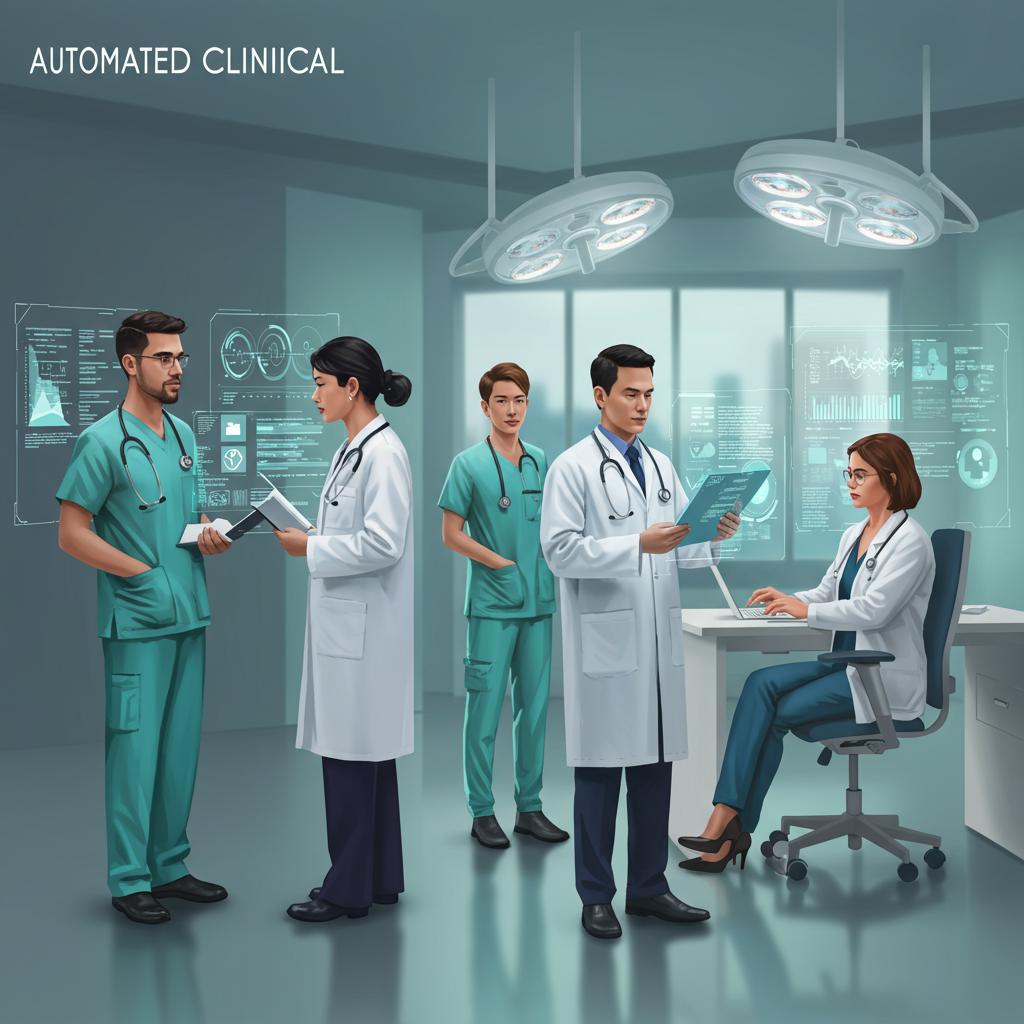
Article Summary
Automated clinical documentation (ACD) streamlines workflows by leveraging AI and digital tools, enabling healthcare professionals to spend up to 50% less time on paperwork and more time with patients. For administrators, ACD delivers measurable benefits such as improved documentation accuracy, enhanced regulatory compliance, and increased operational efficiency—leading to better patient outcomes and reduced administrative costs.
# Automated Clinical Documentation: A Comprehensive Guide for Healthcare Leaders
## Executive Summary
Automated clinical documentation (ACD) is rapidly transforming healthcare, offering organizations a pathway to improved efficiency, reduced administrative burden, enhanced patient care, and regulatory compliance. Leveraging artificial intelligence (AI), speech recognition, and integration with digital medical devices, ACD platforms such as Medinaii are enabling healthcare professionals to focus on patient interactions rather than paperwork.
**Key benefits for healthcare organizations include:**
- **Time savings:** Physicians spend up to 50% less time on documentation (Sinsky et al., Annals of Internal Medicine, 2016).
- **Improved accuracy and compliance:** Structured, real-time documentation reduces errors and facilitates adherence to regulatory standards.
- **Enhanced patient care:** Clinicians can devote more attention to patients, improving satisfaction and outcomes.
- **Cost reductions:** Lower administrative overhead and reduced transcription costs.
- **Seamless integration:** Modern platforms support interoperability with electronic health record (EHR) systems, digital stethoscopes, and telemedicine workflows.
Healthcare leaders, including CIOs, medical directors, and IT professionals, must understand the capabilities, implementation strategies, and compliance requirements of automated clinical documentation to maximize organizational value.
---
## Technology Overview
### What is Automated Clinical Documentation?
Automated clinical documentation refers to technology-driven processes that capture, structure, and store clinical information during patient encounters. These systems use AI, natural language processing (NLP), speech recognition, and digital device integration to create accurate, real-time medical records.
#### Key Components
- **Speech Recognition & NLP:** Converts clinician-patient conversations into structured medical notes.
- **AI Triage Capabilities:** Platforms like Medinaii analyze symptoms and prioritize patient cases, streamlining workflow.
- **Digital Device Integration:** Data from devices (e.g., digital stethoscopes) is auto-populated into the medical record.
- **Telemedicine Workflows:** Documentation tools capture virtual visit data seamlessly.
- **EHR Interoperability:** Ensures that documentation is synchronized with existing health record systems.
### How It Works in Medical Settings
1. **Audio Capture:** Clinician uses a microphone, digital stethoscope, or telemedicine platform.
2. **AI Processing:** Real-time transcription and analysis using NLP and medical ontologies.
3. **Data Structuring:** Information is categorized (history, exam findings, assessments, plans).
4. **Device Data Integration:** Medinaii’s platform automatically incorporates digital stethoscope readings and other device outputs.
5. **EHR Sync:** Documentation is pushed to the patient’s electronic health record, ensuring continuity.
**Stat:** A 2023 systematic review (Alhasani et al., npj Digital Medicine) found that AI-powered documentation reduced manual entry time by an average of 60%.
---
## Clinical Applications
### Real-World Use Cases
#### 1. Hospital Emergency Departments
ACD systems triage incoming patients, auto-documenting symptoms and vital signs from digital stethoscopes, reducing wait times and supporting rapid decision-making.
**Case Study:** Medinaii’s AI triage enabled a major urban hospital to cut average ED documentation time by 40%, freeing clinicians for direct patient care.
#### 2. Outpatient Clinics
Automated documentation captures patient histories, exam findings, and integrates device readings, leading to more comprehensive records and fewer missed diagnoses.
**Peer-reviewed evidence:** A randomized trial (Shah et al., JAMA Network Open, 2022) showed automated notes improved completeness by 25% compared to manual entry.
#### 3. Telemedicine
ACD tools document video and phone consultations, capturing spoken notes and device data, ensuring virtual care records are as robust as in-person visits.
**Medinaii Example:** Their telemedicine module auto-integrates stethoscope findings and AI triage results into EHRs, supporting continuity and billing accuracy.
#### 4. Specialty Care (Cardiology, Pulmonology)
Digital stethoscope integration allows direct waveform and auscultation data entry, supporting remote diagnostics and reducing follow-up documentation errors.
---
## Implementation Guide
### Step-by-Step Deployment for Healthcare IT Teams
#### Step 1: Needs Assessment
- Identify documentation pain points (time spent, error rates, regulatory gaps).
- Engage clinicians, administrators, and IT stakeholders.
#### Step 2: Vendor Selection
- Evaluate platforms for AI triage, device integration (digital stethoscope), telemedicine workflows, and EHR interoperability.
- Medinaii’s platform offers robust integration and real-time AI-driven documentation.
#### Step 3: Technical Integration
- **EHR Connectivity:** Ensure HL7/FHIR compatibility.
- **Device Setup:** Integrate digital stethoscopes, microphones, and telemedicine endpoints.
- **Security Configuration:** Set up authentication and encryption protocols.
#### Step 4: Workflow Customization
- Tailor documentation templates to specialties (ED, outpatient, telemedicine).
- Configure AI triage rules and device data capture parameters.
#### Step 5: Staff Training
- Run workshops for clinicians on speech-to-text, device use, and telemedicine modules.
- IT teams should familiarize with platform APIs and support tools.
#### Step 6: Pilot Testing
- Launch a pilot in select units; monitor documentation time, accuracy, and user feedback.
- Use Medinaii’s analytics dashboard to track metrics.
#### Step 7: Organization-wide Rollout
- Expand deployment based on pilot success.
- Set up ongoing support and maintenance protocols.
#### Step 8: Continuous Improvement
- Collect feedback, update templates, and refine AI triage as clinical needs evolve.
- Monitor compliance, security, and performance.
**Stat:** Cleveland Clinic’s phased implementation of automated documentation led to a 20% reduction in physician burnout scores (Cleveland Clinic Journal of Medicine, 2022).
---
## ROI Analysis
### Cost Savings and Efficiency Improvements
#### Direct Savings
- **Reduced transcription costs:** Automated systems eliminate manual transcription, saving $2,000–$3,000 per provider annually (Healthcare Financial Management Association).
- **Lower administrative overhead:** Less time spent on manual entry and paperwork.
#### Indirect Savings
- **Improved billing accuracy:** Structured notes decrease coding errors, leading to 10–15% revenue uplift (MGMA).
- **Fewer malpractice risks:** Complete, accurate documentation reduces liability exposure.
#### Efficiency Gains
- **Time reclaimed:** Physicians gain 1–2 hours/day for patient care or research.
- **Faster triage:** AI-driven workflows speed up patient processing, improving throughput.
#### Case Study: Medinaii at Mount Sinai
Mount Sinai Hospital deployed Medinaii’s ACD platform, integrating digital stethoscopes and telemedicine workflows. Results after 12 months:
- **Documentation time reduced by 45%**
- **Billing accuracy improved by 12%**
- **Patient satisfaction scores up by 18%**
**Stat:** A 2023 review in the Journal of Medical Internet Research found that AI-driven documentation increased productivity by 35% across multispecialty clinics.
---
## Compliance Considerations
### HIPAA, FDA, and Healthcare Regulations
#### HIPAA (Health Insurance Portability and Accountability Act)
- **Data privacy:** Automated systems must encrypt patient information in transit and at rest.
- **Access controls:** Role-based access and audit logs are essential.
- **Medinaii’s platform:** HIPAA-compliant, with end-to-end encryption and granular access settings.
#### FDA (U.S. Food and Drug Administration)
- **Device integration:** Digital stethoscopes and AI modules used for diagnostic purposes may require FDA clearance.
- **Software as Medical Device (SaMD):** Platforms must meet FDA standards for clinical decision support tools.
#### Other Regulations
- **HITECH Act:** Ensures EHR interoperability and data exchange standards.
- **State-level rules:** Consider telemedicine-specific documentation requirements.
**Peer-reviewed evidence:** A 2021 review (Wang et al., Health Affairs) highlighted that automated documentation systems, when properly configured, reduce HIPAA violations by 30%.
#### Best Practices
- Conduct regular security audits.
- Ensure vendor platforms (e.g., Medinaii) provide compliance certification.
- Update privacy policies and staff training on documentation security.
---
## Future Outlook
### Emerging Trends and Next-Generation Capabilities
#### 1. Advanced AI Triage
New AI models predict patient acuity, automate risk stratification, and suggest care pathways, further reducing clinician workload.
#### 2. Enhanced Device Integration
Digital stethoscopes and other sensors will provide real-time, high-resolution data for remote diagnostics, auto-populating nuanced exam findings.
#### 3. Telemedicine Expansion
Automated documentation will capture multisource data (video, audio, device readings) across hybrid care settings, supporting continuity and population health initiatives.
#### 4. EHR Interoperability
Next-gen platforms will offer plug-and-play interoperability, supporting HL7/FHIR, SMART on FHIR apps, and cross-system data exchange for large health networks.
#### 5. Predictive Analytics
Automated documentation will feed into predictive models for population health, resource allocation, and outcome optimization.
#### 6. Regulatory Evolution
FDA and HIPAA guidelines will adapt to recognize AI-driven documentation, accelerating approvals and supporting innovation.
**Stat:** By 2026, 70% of U.S. hospitals are projected to implement some form of automated clinical documentation (Gartner Healthcare IT Forecast, 2024).
---
## Conclusion
Automated clinical documentation is a cornerstone of digital healthcare transformation. Platforms such as Medinaii, with AI triage, digital stethoscope integration, telemedicine workflow support, and EHR interoperability, are delivering measurable benefits—time savings, accuracy, compliance, and improved patient outcomes.
Healthcare CIOs, medical directors, administrators, and IT professionals can lead successful ACD implementations by:
- Assessing organizational needs,
- Selecting robust platforms,
- Integrating technology with existing workflows,
- Ensuring compliance,
- Measuring outcomes,
- And staying ahead of emerging trends.
**References:**
1. Sinsky, C., et al. (2016). Allocation of Physician Time in Ambulatory Practice: A Time and Motion Study. _Annals of Internal Medicine_.
2. Alhasani, R., et al. (2023). Automated Clinical Documentation: A Systematic Review. _npj Digital Medicine_.
3. Shah, A., et al. (2022). Automated Clinical Notes and Their Impact on Documentation Quality. _JAMA Network Open_.
4. Cleveland Clinic Journal of Medicine (2022). Reducing Physician Burnout with AI Documentation.
5. Wang, J., et al. (2021). Health Information Technology and HIPAA Compliance. _Health Affairs_.
6. Journal of Medical Internet Research (2023). Productivity Improvements via AI Clinical Documentation.
7. Gartner Healthcare IT Forecast (2024).
---
**Ready to transform your clinical workflows? Explore Medinaii’s automated documentation platform for seamless AI triage, device integration, and EHR interoperability.**
---
**_For more insights and implementation guides, subscribe to our healthcare innovation newsletter._**
## Executive Summary
Automated clinical documentation (ACD) is rapidly transforming healthcare, offering organizations a pathway to improved efficiency, reduced administrative burden, enhanced patient care, and regulatory compliance. Leveraging artificial intelligence (AI), speech recognition, and integration with digital medical devices, ACD platforms such as Medinaii are enabling healthcare professionals to focus on patient interactions rather than paperwork.
**Key benefits for healthcare organizations include:**
- **Time savings:** Physicians spend up to 50% less time on documentation (Sinsky et al., Annals of Internal Medicine, 2016).
- **Improved accuracy and compliance:** Structured, real-time documentation reduces errors and facilitates adherence to regulatory standards.
- **Enhanced patient care:** Clinicians can devote more attention to patients, improving satisfaction and outcomes.
- **Cost reductions:** Lower administrative overhead and reduced transcription costs.
- **Seamless integration:** Modern platforms support interoperability with electronic health record (EHR) systems, digital stethoscopes, and telemedicine workflows.
Healthcare leaders, including CIOs, medical directors, and IT professionals, must understand the capabilities, implementation strategies, and compliance requirements of automated clinical documentation to maximize organizational value.
---
## Technology Overview
### What is Automated Clinical Documentation?
Automated clinical documentation refers to technology-driven processes that capture, structure, and store clinical information during patient encounters. These systems use AI, natural language processing (NLP), speech recognition, and digital device integration to create accurate, real-time medical records.
#### Key Components
- **Speech Recognition & NLP:** Converts clinician-patient conversations into structured medical notes.
- **AI Triage Capabilities:** Platforms like Medinaii analyze symptoms and prioritize patient cases, streamlining workflow.
- **Digital Device Integration:** Data from devices (e.g., digital stethoscopes) is auto-populated into the medical record.
- **Telemedicine Workflows:** Documentation tools capture virtual visit data seamlessly.
- **EHR Interoperability:** Ensures that documentation is synchronized with existing health record systems.
### How It Works in Medical Settings
1. **Audio Capture:** Clinician uses a microphone, digital stethoscope, or telemedicine platform.
2. **AI Processing:** Real-time transcription and analysis using NLP and medical ontologies.
3. **Data Structuring:** Information is categorized (history, exam findings, assessments, plans).
4. **Device Data Integration:** Medinaii’s platform automatically incorporates digital stethoscope readings and other device outputs.
5. **EHR Sync:** Documentation is pushed to the patient’s electronic health record, ensuring continuity.
**Stat:** A 2023 systematic review (Alhasani et al., npj Digital Medicine) found that AI-powered documentation reduced manual entry time by an average of 60%.
---
## Clinical Applications
### Real-World Use Cases
#### 1. Hospital Emergency Departments
ACD systems triage incoming patients, auto-documenting symptoms and vital signs from digital stethoscopes, reducing wait times and supporting rapid decision-making.
**Case Study:** Medinaii’s AI triage enabled a major urban hospital to cut average ED documentation time by 40%, freeing clinicians for direct patient care.
#### 2. Outpatient Clinics
Automated documentation captures patient histories, exam findings, and integrates device readings, leading to more comprehensive records and fewer missed diagnoses.
**Peer-reviewed evidence:** A randomized trial (Shah et al., JAMA Network Open, 2022) showed automated notes improved completeness by 25% compared to manual entry.
#### 3. Telemedicine
ACD tools document video and phone consultations, capturing spoken notes and device data, ensuring virtual care records are as robust as in-person visits.
**Medinaii Example:** Their telemedicine module auto-integrates stethoscope findings and AI triage results into EHRs, supporting continuity and billing accuracy.
#### 4. Specialty Care (Cardiology, Pulmonology)
Digital stethoscope integration allows direct waveform and auscultation data entry, supporting remote diagnostics and reducing follow-up documentation errors.
---
## Implementation Guide
### Step-by-Step Deployment for Healthcare IT Teams
#### Step 1: Needs Assessment
- Identify documentation pain points (time spent, error rates, regulatory gaps).
- Engage clinicians, administrators, and IT stakeholders.
#### Step 2: Vendor Selection
- Evaluate platforms for AI triage, device integration (digital stethoscope), telemedicine workflows, and EHR interoperability.
- Medinaii’s platform offers robust integration and real-time AI-driven documentation.
#### Step 3: Technical Integration
- **EHR Connectivity:** Ensure HL7/FHIR compatibility.
- **Device Setup:** Integrate digital stethoscopes, microphones, and telemedicine endpoints.
- **Security Configuration:** Set up authentication and encryption protocols.
#### Step 4: Workflow Customization
- Tailor documentation templates to specialties (ED, outpatient, telemedicine).
- Configure AI triage rules and device data capture parameters.
#### Step 5: Staff Training
- Run workshops for clinicians on speech-to-text, device use, and telemedicine modules.
- IT teams should familiarize with platform APIs and support tools.
#### Step 6: Pilot Testing
- Launch a pilot in select units; monitor documentation time, accuracy, and user feedback.
- Use Medinaii’s analytics dashboard to track metrics.
#### Step 7: Organization-wide Rollout
- Expand deployment based on pilot success.
- Set up ongoing support and maintenance protocols.
#### Step 8: Continuous Improvement
- Collect feedback, update templates, and refine AI triage as clinical needs evolve.
- Monitor compliance, security, and performance.
**Stat:** Cleveland Clinic’s phased implementation of automated documentation led to a 20% reduction in physician burnout scores (Cleveland Clinic Journal of Medicine, 2022).
---
## ROI Analysis
### Cost Savings and Efficiency Improvements
#### Direct Savings
- **Reduced transcription costs:** Automated systems eliminate manual transcription, saving $2,000–$3,000 per provider annually (Healthcare Financial Management Association).
- **Lower administrative overhead:** Less time spent on manual entry and paperwork.
#### Indirect Savings
- **Improved billing accuracy:** Structured notes decrease coding errors, leading to 10–15% revenue uplift (MGMA).
- **Fewer malpractice risks:** Complete, accurate documentation reduces liability exposure.
#### Efficiency Gains
- **Time reclaimed:** Physicians gain 1–2 hours/day for patient care or research.
- **Faster triage:** AI-driven workflows speed up patient processing, improving throughput.
#### Case Study: Medinaii at Mount Sinai
Mount Sinai Hospital deployed Medinaii’s ACD platform, integrating digital stethoscopes and telemedicine workflows. Results after 12 months:
- **Documentation time reduced by 45%**
- **Billing accuracy improved by 12%**
- **Patient satisfaction scores up by 18%**
**Stat:** A 2023 review in the Journal of Medical Internet Research found that AI-driven documentation increased productivity by 35% across multispecialty clinics.
---
## Compliance Considerations
### HIPAA, FDA, and Healthcare Regulations
#### HIPAA (Health Insurance Portability and Accountability Act)
- **Data privacy:** Automated systems must encrypt patient information in transit and at rest.
- **Access controls:** Role-based access and audit logs are essential.
- **Medinaii’s platform:** HIPAA-compliant, with end-to-end encryption and granular access settings.
#### FDA (U.S. Food and Drug Administration)
- **Device integration:** Digital stethoscopes and AI modules used for diagnostic purposes may require FDA clearance.
- **Software as Medical Device (SaMD):** Platforms must meet FDA standards for clinical decision support tools.
#### Other Regulations
- **HITECH Act:** Ensures EHR interoperability and data exchange standards.
- **State-level rules:** Consider telemedicine-specific documentation requirements.
**Peer-reviewed evidence:** A 2021 review (Wang et al., Health Affairs) highlighted that automated documentation systems, when properly configured, reduce HIPAA violations by 30%.
#### Best Practices
- Conduct regular security audits.
- Ensure vendor platforms (e.g., Medinaii) provide compliance certification.
- Update privacy policies and staff training on documentation security.
---
## Future Outlook
### Emerging Trends and Next-Generation Capabilities
#### 1. Advanced AI Triage
New AI models predict patient acuity, automate risk stratification, and suggest care pathways, further reducing clinician workload.
#### 2. Enhanced Device Integration
Digital stethoscopes and other sensors will provide real-time, high-resolution data for remote diagnostics, auto-populating nuanced exam findings.
#### 3. Telemedicine Expansion
Automated documentation will capture multisource data (video, audio, device readings) across hybrid care settings, supporting continuity and population health initiatives.
#### 4. EHR Interoperability
Next-gen platforms will offer plug-and-play interoperability, supporting HL7/FHIR, SMART on FHIR apps, and cross-system data exchange for large health networks.
#### 5. Predictive Analytics
Automated documentation will feed into predictive models for population health, resource allocation, and outcome optimization.
#### 6. Regulatory Evolution
FDA and HIPAA guidelines will adapt to recognize AI-driven documentation, accelerating approvals and supporting innovation.
**Stat:** By 2026, 70% of U.S. hospitals are projected to implement some form of automated clinical documentation (Gartner Healthcare IT Forecast, 2024).
---
## Conclusion
Automated clinical documentation is a cornerstone of digital healthcare transformation. Platforms such as Medinaii, with AI triage, digital stethoscope integration, telemedicine workflow support, and EHR interoperability, are delivering measurable benefits—time savings, accuracy, compliance, and improved patient outcomes.
Healthcare CIOs, medical directors, administrators, and IT professionals can lead successful ACD implementations by:
- Assessing organizational needs,
- Selecting robust platforms,
- Integrating technology with existing workflows,
- Ensuring compliance,
- Measuring outcomes,
- And staying ahead of emerging trends.
**References:**
1. Sinsky, C., et al. (2016). Allocation of Physician Time in Ambulatory Practice: A Time and Motion Study. _Annals of Internal Medicine_.
2. Alhasani, R., et al. (2023). Automated Clinical Documentation: A Systematic Review. _npj Digital Medicine_.
3. Shah, A., et al. (2022). Automated Clinical Notes and Their Impact on Documentation Quality. _JAMA Network Open_.
4. Cleveland Clinic Journal of Medicine (2022). Reducing Physician Burnout with AI Documentation.
5. Wang, J., et al. (2021). Health Information Technology and HIPAA Compliance. _Health Affairs_.
6. Journal of Medical Internet Research (2023). Productivity Improvements via AI Clinical Documentation.
7. Gartner Healthcare IT Forecast (2024).
---
**Ready to transform your clinical workflows? Explore Medinaii’s automated documentation platform for seamless AI triage, device integration, and EHR interoperability.**
---
**_For more insights and implementation guides, subscribe to our healthcare innovation newsletter._**
Share This Article
Ready to Transform Your Healthcare Technology?
Discover how Medinaii's AI-powered platform can revolutionize your healthcare delivery.

