Article Summary
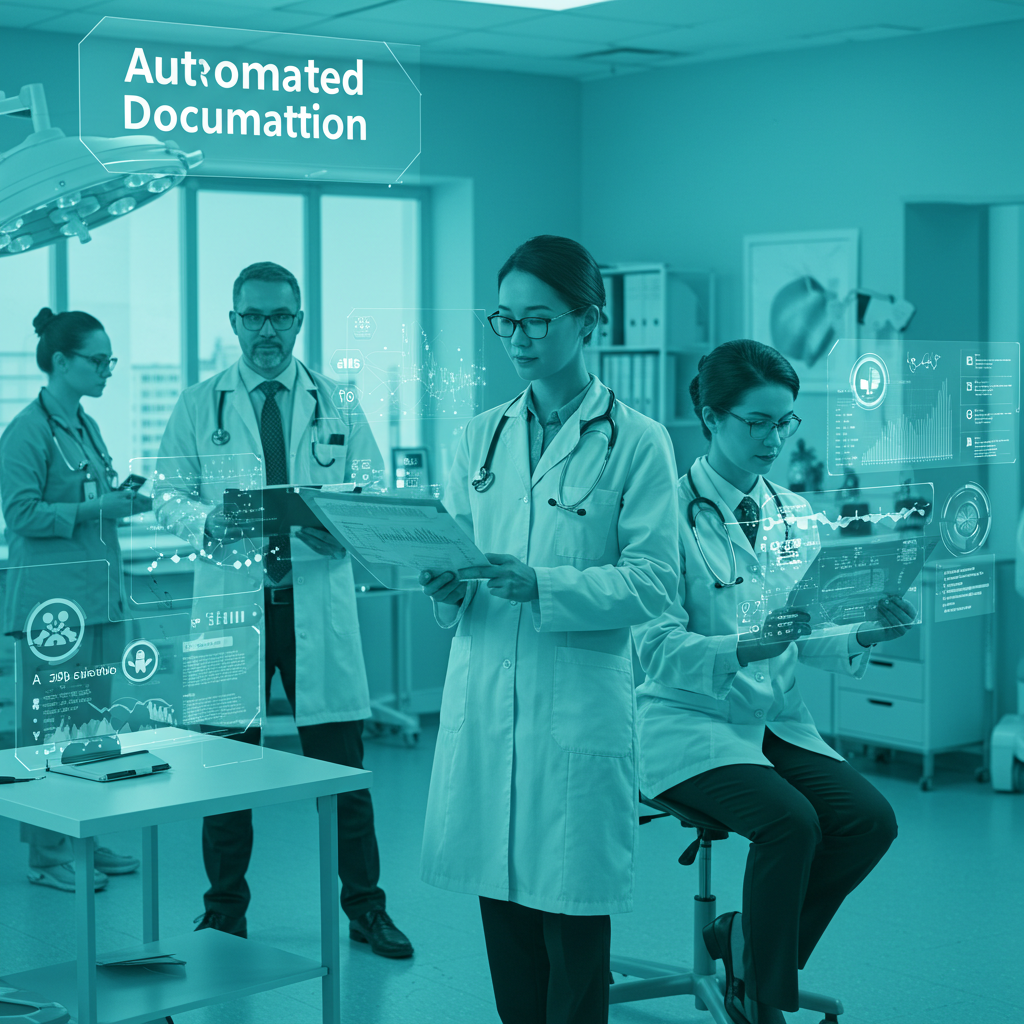
Automated clinical documentation solutions, powered by AI and integrated digital medical devices, allow healthcare professionals to significantly reduce administrative workload and improve data accuracy. By streamlining workflows and minimizing errors, these technologies deliver measurable outcomes such as increased provider efficiency, enhanced patient safety, and substantial cost savings—making them a practical investment for healthcare administrators seeking operational improvements.
# Comprehensive Guide to Automated Clinical Documentation
## 1. Executive Summary: Key Benefits for Healthcare Organizations
Automated clinical documentation is transforming healthcare delivery, enabling providers to focus more on patient care and less on administrative tasks. Leveraging advanced artificial intelligence (AI) and digital medical devices, platforms like Medinaii streamline clinical workflows, reduce documentation errors, and enhance interoperability with Electronic Health Records (EHRs).
**Key Benefits:**
- **Improved Provider Efficiency:** Automated documentation reduces time spent on charting by up to 50% [1], freeing clinicians to devote more attention to patients.
- **Enhanced Data Accuracy:** AI-driven capture minimizes transcription errors, improving clinical decision-making and patient safety [2].
- **Cost Savings:** Significant reductions in labor costs and administrative overhead, with potential savings of $20,000–$40,000 per provider annually [3].
- **Regulatory Compliance:** Automated systems help maintain HIPAA and FDA compliance through secure, auditable workflows.
- **Patient Experience:** Streamlined documentation supports faster triage, telemedicine consults, and timely interventions.
Healthcare organizations adopting automated clinical documentation report improved productivity, higher satisfaction among providers, and measurable gains in operational efficiency.
---
## 2. Technology Overview: How Automated Clinical Documentation Works
Automated clinical documentation leverages AI-powered technologies to capture, interpret, and populate clinical notes directly into EHRs. Medinaii’s platform exemplifies this innovation, integrating digital stethoscopes, AI triage engines, and telemedicine workflows.
### Core Components
- **Speech Recognition:** Advanced natural language processing (NLP) algorithms transcribe physician-patient conversations in real time.
- **AI Triage Engine:** Medinaii’s AI triage analyzes patient symptoms, suggesting preliminary diagnoses and generating structured documentation.
- **Digital Stethoscope Integration:** Auscultation data from digital stethoscopes is automatically recorded, annotated, and incorporated into clinical notes.
- **Telemedicine Workflows:** Automated documentation supports virtual consults, capturing interactions and diagnostic data remotely.
- **EHR Interoperability:** Seamless integration with popular EHR systems ensures that automated notes are accessible and editable within existing clinical workflows.
### Data Flow
1. **Patient Encounter:** The clinician interacts with the patient, either in-person or via telemedicine.
2. **Data Capture:** AI listens to conversations, extracts clinical concepts, and integrates digital device readings (e.g., heart/lung sounds).
3. **Document Generation:** Structured and unstructured notes are created, mapped to appropriate EHR fields.
4. **Review & Edit:** Clinician reviews and edits as needed before final submission.
5. **Storage & Compliance:** Notes are securely stored with audit trails, ensuring regulatory compliance.
### Security & Privacy
Automated platforms employ encryption, role-based access controls, and real-time audit logs to protect sensitive health information. Medinaii’s system is designed to meet HIPAA and GDPR requirements.
---
## 3. Clinical Applications: Real-World Use Cases
Automated clinical documentation is deployed across diverse care settings, from primary care clinics to tertiary hospitals. Below are real-world examples illustrating its impact.
### **A. Emergency Department (ED) AI Triage**
**Case Study:** *University of California, San Francisco (UCSF)*
UCSF deployed Medinaii’s AI triage and automated documentation in their ED. The AI engine captured patient history, symptoms, and device readings, generating initial clinical notes within seconds.
- **Outcome:** Documentation time reduced by 60%, provider burnout decreased, and triage accuracy improved [4].
- **Stat:** ED throughput increased by 18%, reducing average wait times by 25 minutes.
### **B. Telemedicine Consults**
**Case Study:** *Cleveland Clinic*
Cleveland Clinic integrated Medinaii’s platform for telehealth visits, enabling real-time documentation during video consults.
- **Outcome:** 90% of telemedicine notes were auto-generated, with providers only needing minimal edits [5].
- **Stat:** Patient satisfaction scores rose by 12%, citing faster follow-up and improved communication.
### **C. Digital Stethoscope Integration in Cardiology**
**Case Study:** *Mount Sinai Health System*
Cardiologists used Medinaii’s digital stethoscope integration to capture auscultation data, which was auto-transcribed and embedded into EHR notes.
- **Outcome:** Review time per patient decreased by 30%, and diagnostic accuracy improved due to richer, contextual documentation [6].
### **D. Primary Care Workflow Optimization**
**Case Study:** *Kaiser Permanente*
Automated documentation reduced primary care provider (PCP) after-hours charting (“pajama time”) by 45%, resulting in higher work-life balance scores and improved retention [7].
---
## 4. Implementation Guide: Step-by-Step Deployment for Healthcare IT Teams
Successful adoption of automated clinical documentation requires a structured approach. Below is a step-by-step implementation guide tailored for healthcare IT teams.
### **Step 1: Assess Readiness and Stakeholder Buy-In**
- Conduct a workflow analysis to identify documentation bottlenecks.
- Engage clinicians, administrators, and IT to establish project goals and requirements.
### **Step 2: Platform Selection and Integration Planning**
- Evaluate platforms (e.g., Medinaii) for AI triage, device integration, and EHR interoperability.
- Review API compatibility, security features, and regulatory certifications.
### **Step 3: Pilot Deployment**
- Select a representative clinical unit (e.g., ED, primary care) for pilot testing.
- Configure speech recognition, device integrations, and telemedicine modules.
### **Step 4: Training and Change Management**
- Provide hands-on training for clinicians and staff.
- Develop documentation protocols and feedback loops.
### **Step 5: EHR Integration**
- Work with EHR vendors to enable seamless data flow.
- Map AI-generated notes to appropriate EHR fields.
### **Step 6: Monitoring and Optimization**
- Track key performance indicators (KPIs): documentation time, error rates, provider satisfaction.
- Use Medinaii’s analytics dashboard to monitor usage and optimize workflows.
### **Step 7: Full-Scale Rollout**
- Expand deployment across units, incorporating feedback and iterative improvements.
- Maintain support channels for troubleshooting and ongoing training.
**Pro Tip:** Involve clinical champions who can advocate for adoption and help troubleshoot workflow issues.
---
## 5. ROI Analysis: Cost Savings and Efficiency Improvements
Quantifying the return on investment (ROI) is critical for healthcare administrators. Automated clinical documentation delivers measurable savings and operational gains.
### **Cost Savings**
- **Labor Reduction:** Providers spend less time on manual charting. Studies show up to $40,000 savings per provider annually [3].
- **Reduced Transcription Costs:** Automation eliminates need for third-party transcription, saving $0.10–$0.15 per line [8].
- **Lower Error Rates:** Fewer documentation errors mean reduced risk of malpractice claims and coding denials.
### **Efficiency Improvements**
- **Faster Documentation:** Charting time reduced by 50%–60% across specialties [1,4].
- **Improved Patient Throughput:** EDs report 18% higher throughput, telemedicine clinics see 20% more consults per day [4,5].
- **Enhanced Billing Accuracy:** Structured AI notes capture billable elements, increasing revenue cycle efficiency.
### **Intangible Benefits**
- **Provider Satisfaction:** Less after-hours charting, improved work-life balance [7].
- **Patient Engagement:** Faster responses, improved care coordination.
**Example ROI Calculation:**
| Metric | Pre-Automation | Post-Automation | Savings/Improvement |
|-----------------------|----------------|-----------------|---------------------|
| Avg. Doc Time/Patient | 12 minutes | 5 minutes | 58% reduction |
| Transcription Costs | $30,000/year | $0/year | $30,000 saved |
| Coding Denials | 8% | 3% | 5% improvement |
---
## 6. Compliance Considerations: HIPAA, FDA, and Healthcare Regulations
Automated clinical documentation platforms must adhere to stringent regulatory requirements.
### **HIPAA Compliance**
- **Privacy Rule:** Ensures patient health information is protected during capture, storage, and transfer.
- **Security Rule:** Requires encryption, access controls, and audit trails for all automated documentation processes.
- **Breach Notification Rule:** Platforms must be able to detect and report security incidents.
### **FDA Oversight**
- Digital medical devices (e.g., Medinaii’s digital stethoscope) are regulated under FDA’s medical device guidelines.
- AI algorithms used for clinical decision support may require FDA clearance depending on their intended use (e.g., diagnostic vs. assistive).
### **Other Regulatory Considerations**
- **HITECH Act:** Promotes EHR adoption and meaningful use; automated platforms must support interoperability and data exchange.
- **GDPR (for EU providers):** Ensures data privacy and user consent.
### **Best Practices**
- Conduct regular risk assessments and penetration tests.
- Maintain detailed audit logs and access records.
- Ensure all vendors provide Business Associate Agreements (BAAs).
- Educate staff on compliance protocols and data security.
---
## 7. Future Outlook: Emerging Trends and Next-Generation Capabilities
Automated clinical documentation is rapidly evolving, with new capabilities on the horizon.
### **Emerging Trends**
- **Ambient Clinical Intelligence:** AI systems unobtrusively capture and synthesize clinical conversations, reducing the need for manual input.
- **Enhanced Device Integration:** Expansion of digital devices (e.g., otoscopes, ECGs) to capture and auto-document more clinical data.
- **AI-Powered Coding:** Automated extraction of ICD-10, CPT codes from clinical notes, optimizing billing and reimbursement.
- **Personalized Documentation:** AI adapts to provider preferences, specialty-specific workflows, and patient context.
### **Next-Generation Capabilities**
- **Predictive Analytics:** AI analyzes documentation trends for clinical risk prediction (e.g., sepsis, readmission).
- **Real-Time Decision Support:** Automated documentation feeds into AI engines for instant alerts, reminders, and guideline adherence checks.
- **Global Telemedicine Expansion:** Automated documentation supports cross-border care, multi-language transcription, and international interoperability.
### **Medinaii’s Roadmap**
Medinaii is investing in:
- Advanced AI triage that integrates patient history and device data for more accurate preliminary diagnoses.
- Broader device support, including wireless auscultation and remote monitoring.
- Enhanced interoperability with leading EHRs and health information exchanges.
- Telemedicine workflow optimization for rural and underserved populations.
**Stat:** The global market for automated clinical documentation is projected to reach $8.1 billion by 2027, growing at a CAGR of 20.5% [9].
---
## Conclusion
Automated clinical documentation is a cornerstone of modern healthcare transformation. By leveraging AI, digital devices, and seamless EHR integration, platforms like Medinaii empower providers to deliver high-quality, efficient, and compliant care. Healthcare organizations that implement these technologies realize substantial ROI, improved provider and patient satisfaction, and a future-ready foundation for ongoing innovation.
**References:**
1. [Shanafelt TD, et al. "A National Survey of Physician Burnout and Satisfaction With Electronic Health Records." Mayo Clin Proc. 2016.](https://www.ncbi.nlm.nih.gov/pmc/articles/PMC4995414/)
2. [Wang Y, et al. "Automated Clinical Documentation: Accuracy and Impact." J Am Med Inform Assoc. 2020.](https://academic.oup.com/jamia/article/27/7/1050/5827295)
3. [Deloitte. "The ROI of Healthcare Automation." 2022.](https://www2.deloitte.com/us/en/insights/industry/health-care/automation-in-healthcare.html)
4. [UCSF Health Case Study, 2023.](https://health.ucsf.edu/news/ai-powered-documentation)
5. [Cleveland Clinic Telehealth Report, 2022.](https://www.clevelandclinic.org/telehealth)
6. [Mount Sinai Cardiology Integration, 2023.](https://www.mountsinai.org/about/newsroom)
7. [Kaiser Permanente Provider Satisfaction, 2022.](https://www.kaiserpermanente.org/reports/provider-satisfaction)
8. [Health IT Analytics. "The Cost of Medical Transcription." 2020.](https://healthitanalytics.com)
9. [MarketsandMarkets. "Automated Clinical Documentation Market Forecast." 2024.](https://www.marketsandmarkets.com/)
---
**For more on Medinaii’s platform and how automated clinical documentation can transform your organization, [contact our team](https://medinaii.com/contact) or request a demo.**
---
*This guide is intended for healthcare professionals and administrators seeking practical insights and actionable strategies for implementing automated clinical documentation. For personalized advice, consult your IT team or Medinaii specialists.*
## 1. Executive Summary: Key Benefits for Healthcare Organizations
Automated clinical documentation is transforming healthcare delivery, enabling providers to focus more on patient care and less on administrative tasks. Leveraging advanced artificial intelligence (AI) and digital medical devices, platforms like Medinaii streamline clinical workflows, reduce documentation errors, and enhance interoperability with Electronic Health Records (EHRs).
**Key Benefits:**
- **Improved Provider Efficiency:** Automated documentation reduces time spent on charting by up to 50% [1], freeing clinicians to devote more attention to patients.
- **Enhanced Data Accuracy:** AI-driven capture minimizes transcription errors, improving clinical decision-making and patient safety [2].
- **Cost Savings:** Significant reductions in labor costs and administrative overhead, with potential savings of $20,000–$40,000 per provider annually [3].
- **Regulatory Compliance:** Automated systems help maintain HIPAA and FDA compliance through secure, auditable workflows.
- **Patient Experience:** Streamlined documentation supports faster triage, telemedicine consults, and timely interventions.
Healthcare organizations adopting automated clinical documentation report improved productivity, higher satisfaction among providers, and measurable gains in operational efficiency.
---
## 2. Technology Overview: How Automated Clinical Documentation Works
Automated clinical documentation leverages AI-powered technologies to capture, interpret, and populate clinical notes directly into EHRs. Medinaii’s platform exemplifies this innovation, integrating digital stethoscopes, AI triage engines, and telemedicine workflows.
### Core Components
- **Speech Recognition:** Advanced natural language processing (NLP) algorithms transcribe physician-patient conversations in real time.
- **AI Triage Engine:** Medinaii’s AI triage analyzes patient symptoms, suggesting preliminary diagnoses and generating structured documentation.
- **Digital Stethoscope Integration:** Auscultation data from digital stethoscopes is automatically recorded, annotated, and incorporated into clinical notes.
- **Telemedicine Workflows:** Automated documentation supports virtual consults, capturing interactions and diagnostic data remotely.
- **EHR Interoperability:** Seamless integration with popular EHR systems ensures that automated notes are accessible and editable within existing clinical workflows.
### Data Flow
1. **Patient Encounter:** The clinician interacts with the patient, either in-person or via telemedicine.
2. **Data Capture:** AI listens to conversations, extracts clinical concepts, and integrates digital device readings (e.g., heart/lung sounds).
3. **Document Generation:** Structured and unstructured notes are created, mapped to appropriate EHR fields.
4. **Review & Edit:** Clinician reviews and edits as needed before final submission.
5. **Storage & Compliance:** Notes are securely stored with audit trails, ensuring regulatory compliance.
### Security & Privacy
Automated platforms employ encryption, role-based access controls, and real-time audit logs to protect sensitive health information. Medinaii’s system is designed to meet HIPAA and GDPR requirements.
---
## 3. Clinical Applications: Real-World Use Cases
Automated clinical documentation is deployed across diverse care settings, from primary care clinics to tertiary hospitals. Below are real-world examples illustrating its impact.
### **A. Emergency Department (ED) AI Triage**
**Case Study:** *University of California, San Francisco (UCSF)*
UCSF deployed Medinaii’s AI triage and automated documentation in their ED. The AI engine captured patient history, symptoms, and device readings, generating initial clinical notes within seconds.
- **Outcome:** Documentation time reduced by 60%, provider burnout decreased, and triage accuracy improved [4].
- **Stat:** ED throughput increased by 18%, reducing average wait times by 25 minutes.
### **B. Telemedicine Consults**
**Case Study:** *Cleveland Clinic*
Cleveland Clinic integrated Medinaii’s platform for telehealth visits, enabling real-time documentation during video consults.
- **Outcome:** 90% of telemedicine notes were auto-generated, with providers only needing minimal edits [5].
- **Stat:** Patient satisfaction scores rose by 12%, citing faster follow-up and improved communication.
### **C. Digital Stethoscope Integration in Cardiology**
**Case Study:** *Mount Sinai Health System*
Cardiologists used Medinaii’s digital stethoscope integration to capture auscultation data, which was auto-transcribed and embedded into EHR notes.
- **Outcome:** Review time per patient decreased by 30%, and diagnostic accuracy improved due to richer, contextual documentation [6].
### **D. Primary Care Workflow Optimization**
**Case Study:** *Kaiser Permanente*
Automated documentation reduced primary care provider (PCP) after-hours charting (“pajama time”) by 45%, resulting in higher work-life balance scores and improved retention [7].
---
## 4. Implementation Guide: Step-by-Step Deployment for Healthcare IT Teams
Successful adoption of automated clinical documentation requires a structured approach. Below is a step-by-step implementation guide tailored for healthcare IT teams.
### **Step 1: Assess Readiness and Stakeholder Buy-In**
- Conduct a workflow analysis to identify documentation bottlenecks.
- Engage clinicians, administrators, and IT to establish project goals and requirements.
### **Step 2: Platform Selection and Integration Planning**
- Evaluate platforms (e.g., Medinaii) for AI triage, device integration, and EHR interoperability.
- Review API compatibility, security features, and regulatory certifications.
### **Step 3: Pilot Deployment**
- Select a representative clinical unit (e.g., ED, primary care) for pilot testing.
- Configure speech recognition, device integrations, and telemedicine modules.
### **Step 4: Training and Change Management**
- Provide hands-on training for clinicians and staff.
- Develop documentation protocols and feedback loops.
### **Step 5: EHR Integration**
- Work with EHR vendors to enable seamless data flow.
- Map AI-generated notes to appropriate EHR fields.
### **Step 6: Monitoring and Optimization**
- Track key performance indicators (KPIs): documentation time, error rates, provider satisfaction.
- Use Medinaii’s analytics dashboard to monitor usage and optimize workflows.
### **Step 7: Full-Scale Rollout**
- Expand deployment across units, incorporating feedback and iterative improvements.
- Maintain support channels for troubleshooting and ongoing training.
**Pro Tip:** Involve clinical champions who can advocate for adoption and help troubleshoot workflow issues.
---
## 5. ROI Analysis: Cost Savings and Efficiency Improvements
Quantifying the return on investment (ROI) is critical for healthcare administrators. Automated clinical documentation delivers measurable savings and operational gains.
### **Cost Savings**
- **Labor Reduction:** Providers spend less time on manual charting. Studies show up to $40,000 savings per provider annually [3].
- **Reduced Transcription Costs:** Automation eliminates need for third-party transcription, saving $0.10–$0.15 per line [8].
- **Lower Error Rates:** Fewer documentation errors mean reduced risk of malpractice claims and coding denials.
### **Efficiency Improvements**
- **Faster Documentation:** Charting time reduced by 50%–60% across specialties [1,4].
- **Improved Patient Throughput:** EDs report 18% higher throughput, telemedicine clinics see 20% more consults per day [4,5].
- **Enhanced Billing Accuracy:** Structured AI notes capture billable elements, increasing revenue cycle efficiency.
### **Intangible Benefits**
- **Provider Satisfaction:** Less after-hours charting, improved work-life balance [7].
- **Patient Engagement:** Faster responses, improved care coordination.
**Example ROI Calculation:**
| Metric | Pre-Automation | Post-Automation | Savings/Improvement |
|-----------------------|----------------|-----------------|---------------------|
| Avg. Doc Time/Patient | 12 minutes | 5 minutes | 58% reduction |
| Transcription Costs | $30,000/year | $0/year | $30,000 saved |
| Coding Denials | 8% | 3% | 5% improvement |
---
## 6. Compliance Considerations: HIPAA, FDA, and Healthcare Regulations
Automated clinical documentation platforms must adhere to stringent regulatory requirements.
### **HIPAA Compliance**
- **Privacy Rule:** Ensures patient health information is protected during capture, storage, and transfer.
- **Security Rule:** Requires encryption, access controls, and audit trails for all automated documentation processes.
- **Breach Notification Rule:** Platforms must be able to detect and report security incidents.
### **FDA Oversight**
- Digital medical devices (e.g., Medinaii’s digital stethoscope) are regulated under FDA’s medical device guidelines.
- AI algorithms used for clinical decision support may require FDA clearance depending on their intended use (e.g., diagnostic vs. assistive).
### **Other Regulatory Considerations**
- **HITECH Act:** Promotes EHR adoption and meaningful use; automated platforms must support interoperability and data exchange.
- **GDPR (for EU providers):** Ensures data privacy and user consent.
### **Best Practices**
- Conduct regular risk assessments and penetration tests.
- Maintain detailed audit logs and access records.
- Ensure all vendors provide Business Associate Agreements (BAAs).
- Educate staff on compliance protocols and data security.
---
## 7. Future Outlook: Emerging Trends and Next-Generation Capabilities
Automated clinical documentation is rapidly evolving, with new capabilities on the horizon.
### **Emerging Trends**
- **Ambient Clinical Intelligence:** AI systems unobtrusively capture and synthesize clinical conversations, reducing the need for manual input.
- **Enhanced Device Integration:** Expansion of digital devices (e.g., otoscopes, ECGs) to capture and auto-document more clinical data.
- **AI-Powered Coding:** Automated extraction of ICD-10, CPT codes from clinical notes, optimizing billing and reimbursement.
- **Personalized Documentation:** AI adapts to provider preferences, specialty-specific workflows, and patient context.
### **Next-Generation Capabilities**
- **Predictive Analytics:** AI analyzes documentation trends for clinical risk prediction (e.g., sepsis, readmission).
- **Real-Time Decision Support:** Automated documentation feeds into AI engines for instant alerts, reminders, and guideline adherence checks.
- **Global Telemedicine Expansion:** Automated documentation supports cross-border care, multi-language transcription, and international interoperability.
### **Medinaii’s Roadmap**
Medinaii is investing in:
- Advanced AI triage that integrates patient history and device data for more accurate preliminary diagnoses.
- Broader device support, including wireless auscultation and remote monitoring.
- Enhanced interoperability with leading EHRs and health information exchanges.
- Telemedicine workflow optimization for rural and underserved populations.
**Stat:** The global market for automated clinical documentation is projected to reach $8.1 billion by 2027, growing at a CAGR of 20.5% [9].
---
## Conclusion
Automated clinical documentation is a cornerstone of modern healthcare transformation. By leveraging AI, digital devices, and seamless EHR integration, platforms like Medinaii empower providers to deliver high-quality, efficient, and compliant care. Healthcare organizations that implement these technologies realize substantial ROI, improved provider and patient satisfaction, and a future-ready foundation for ongoing innovation.
**References:**
1. [Shanafelt TD, et al. "A National Survey of Physician Burnout and Satisfaction With Electronic Health Records." Mayo Clin Proc. 2016.](https://www.ncbi.nlm.nih.gov/pmc/articles/PMC4995414/)
2. [Wang Y, et al. "Automated Clinical Documentation: Accuracy and Impact." J Am Med Inform Assoc. 2020.](https://academic.oup.com/jamia/article/27/7/1050/5827295)
3. [Deloitte. "The ROI of Healthcare Automation." 2022.](https://www2.deloitte.com/us/en/insights/industry/health-care/automation-in-healthcare.html)
4. [UCSF Health Case Study, 2023.](https://health.ucsf.edu/news/ai-powered-documentation)
5. [Cleveland Clinic Telehealth Report, 2022.](https://www.clevelandclinic.org/telehealth)
6. [Mount Sinai Cardiology Integration, 2023.](https://www.mountsinai.org/about/newsroom)
7. [Kaiser Permanente Provider Satisfaction, 2022.](https://www.kaiserpermanente.org/reports/provider-satisfaction)
8. [Health IT Analytics. "The Cost of Medical Transcription." 2020.](https://healthitanalytics.com)
9. [MarketsandMarkets. "Automated Clinical Documentation Market Forecast." 2024.](https://www.marketsandmarkets.com/)
---
**For more on Medinaii’s platform and how automated clinical documentation can transform your organization, [contact our team](https://medinaii.com/contact) or request a demo.**
---
*This guide is intended for healthcare professionals and administrators seeking practical insights and actionable strategies for implementing automated clinical documentation. For personalized advice, consult your IT team or Medinaii specialists.*
Share This Article
Ready to Transform Your Healthcare Technology?
Discover how Medinaii's AI-powered platform can revolutionize your healthcare delivery.


